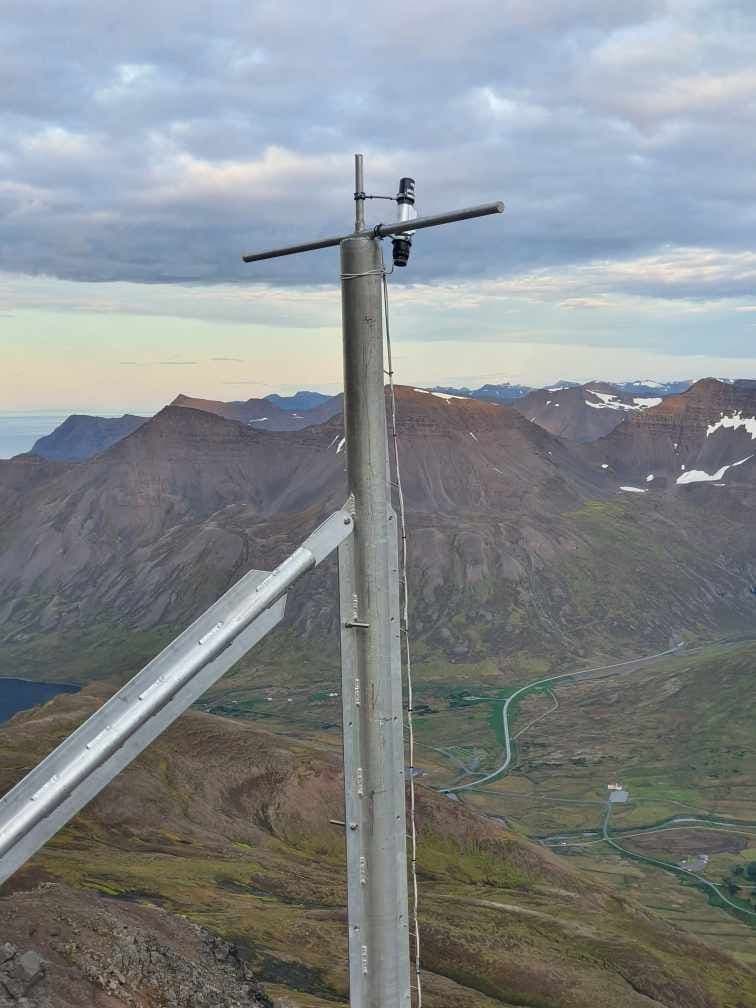
SM4 is a lightweight, solar-powered snow sensor designed for deployment in remote mountain locations. It can be carried to the installation site on foot and set up without heavy equipment. The sensor consists of the following components:
A temperature cable with 16 or 26 sensors at 20 cm intervals, extending through the snowpack. The cable is available in 3 m and 5 m lengths. Custom lengths and sensor intervals are available on request.
A laser distance sensor that measures snow depth directly. The sensor includes a heater to prevent icing on the lens.
An optional wind sensor that measures wind speed and direction.
A data logger that collects measurements from all sensors in real time.
A communication unit that transmits data via LTE-M or NB-IoT every 10 minutes. Data is displayed on snowsense.is and available via REST API.
A solar panel with battery backup.
The SM4 is energy-efficient and designed to operate through the winter without external power. If battery charge decreases, the transmission interval can be increased to conserve power.
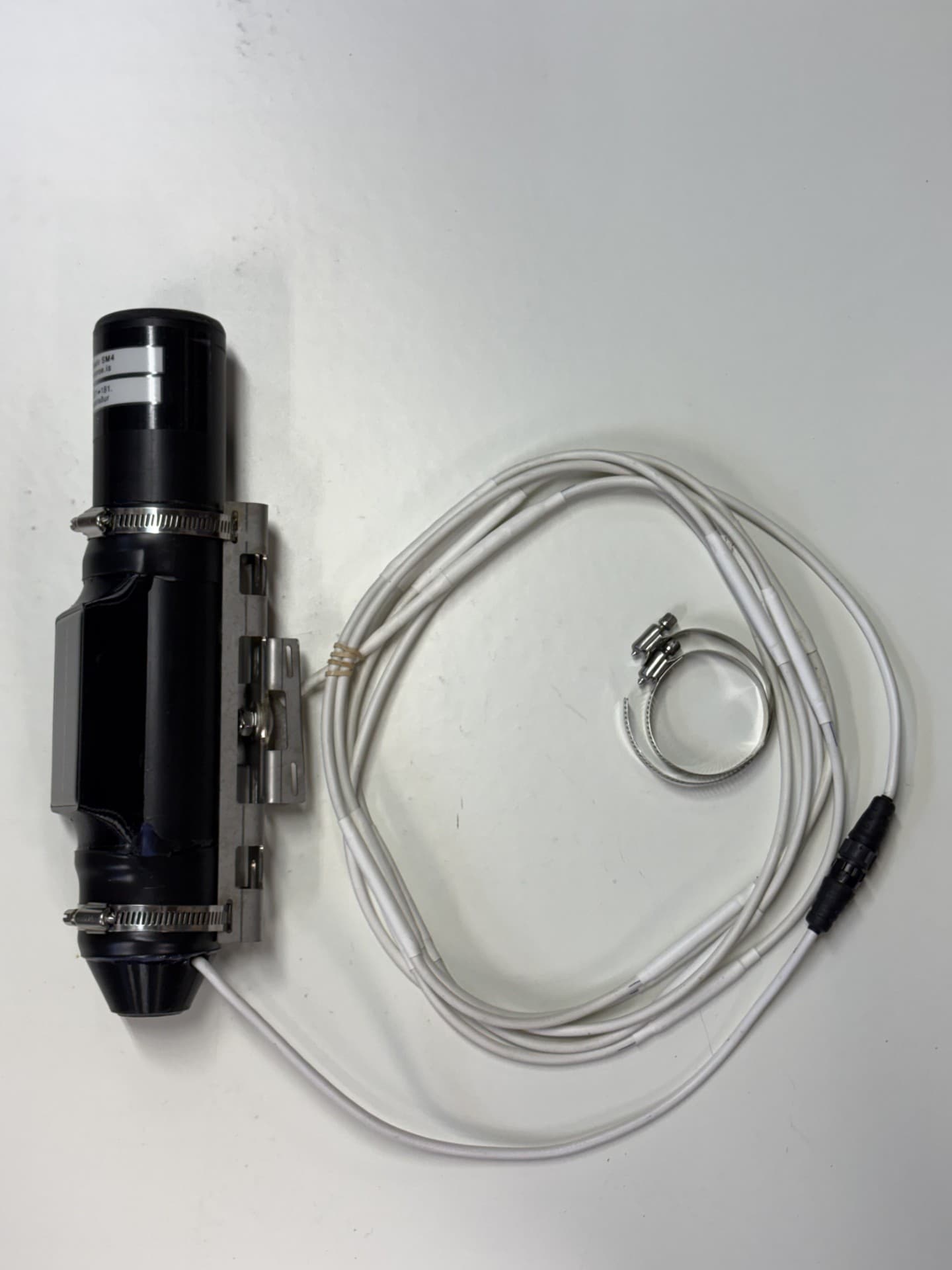
Left: illustration of the SM4 sensor. Right: close-up photo of the SM4 sensor
The SM4 sensors were developed with avalanche monitoring in mind and have been used for that purpose from the start. With SM4 you can track the development of snow depth in real time, and the sensors also provide various information about the layering of the snow. The temperature cable is attached to a mast or pole set up in mountainous terrain, near possible avalanche starting zone. The raw data is a vertical temperature profile in real time, and it's easy to detect snow depth from the fact that air temperature fluctuates much more than snow temperature. An algorithm has been developed that calculates snow depth automatically from the data. In addition to real-time snow depth, the following can also be read from the data:
Air temperature, which is useful information for avalanche monitoring.
Temperature profile in the snow, which matters greatly for avalanche monitoring:
Snow that has become wet and refrozen is usually stable and also has a very stable temperature at 0°C. Typical Icelandic snow, as winter progresses, has a base layer of varying thickness that has been affected by freeze-thaw cycles and is very stable. On top of that there is often layered snow that can become unstable. This division is easy to see from the SM4 sensor data.
In the same way, it's possible to track when snow becomes wet during a thaw, and how far the thaw penetrates into fresh snow. This can be important for the risk of wet-snow avalanches.
When the temperature gradient in the snow is steep, meaning the temperature changes a lot with depth, there is a risk that weak layers will form. If the temperature changes by more than 1°C per 10 cm, snow crystals don't round off and bond, but instead angular crystals form that bond poorly with each other. This can create weak layers that slab avalanches can release on. One of the products on snowsense.is is snow-depth graphs that show whether weak layers risk developing in the snow and at what depth.
Good experience has been gained in Iceland using SM4 sensors for avalanche monitoring, and their numbers have been steadily increasing.